Coordinated Medical Pathway
Structure a case file, identify hospital capacity, and coordinate exchanges with relevant health, diplomatic, and institutional stakeholders.
A pathway built through coordination
In some cases, the medical need is clearly identified and a hospital facility may be able to evaluate care provision. Yet without coordination, the pathway can remain blocked.
An anonymized case of complex medical pathway
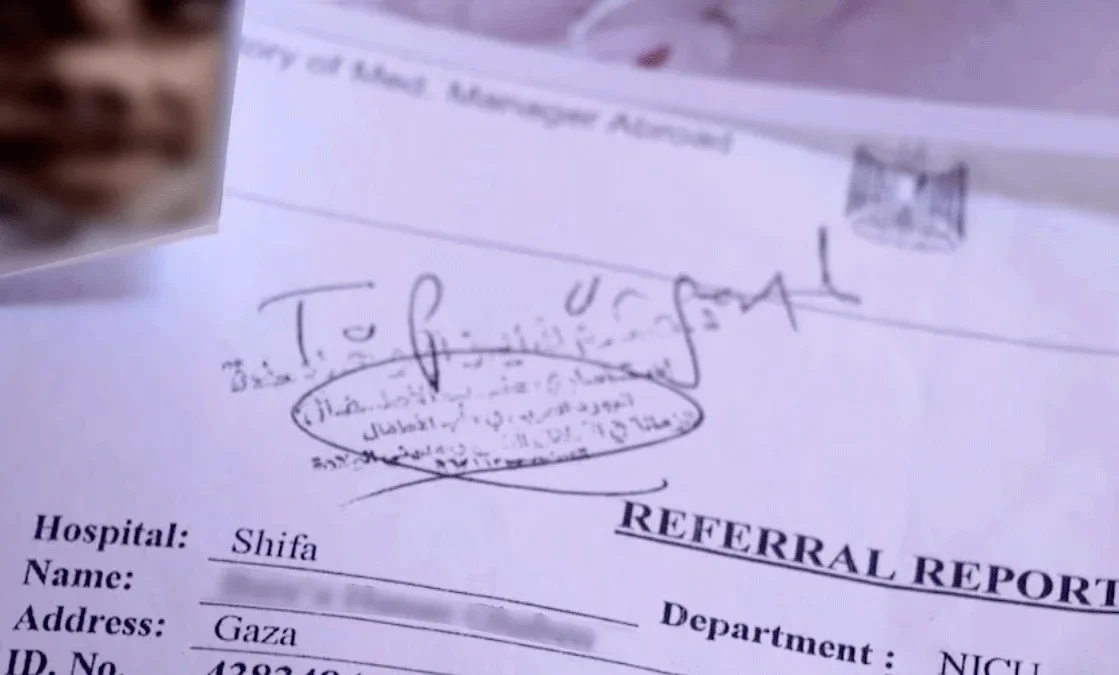
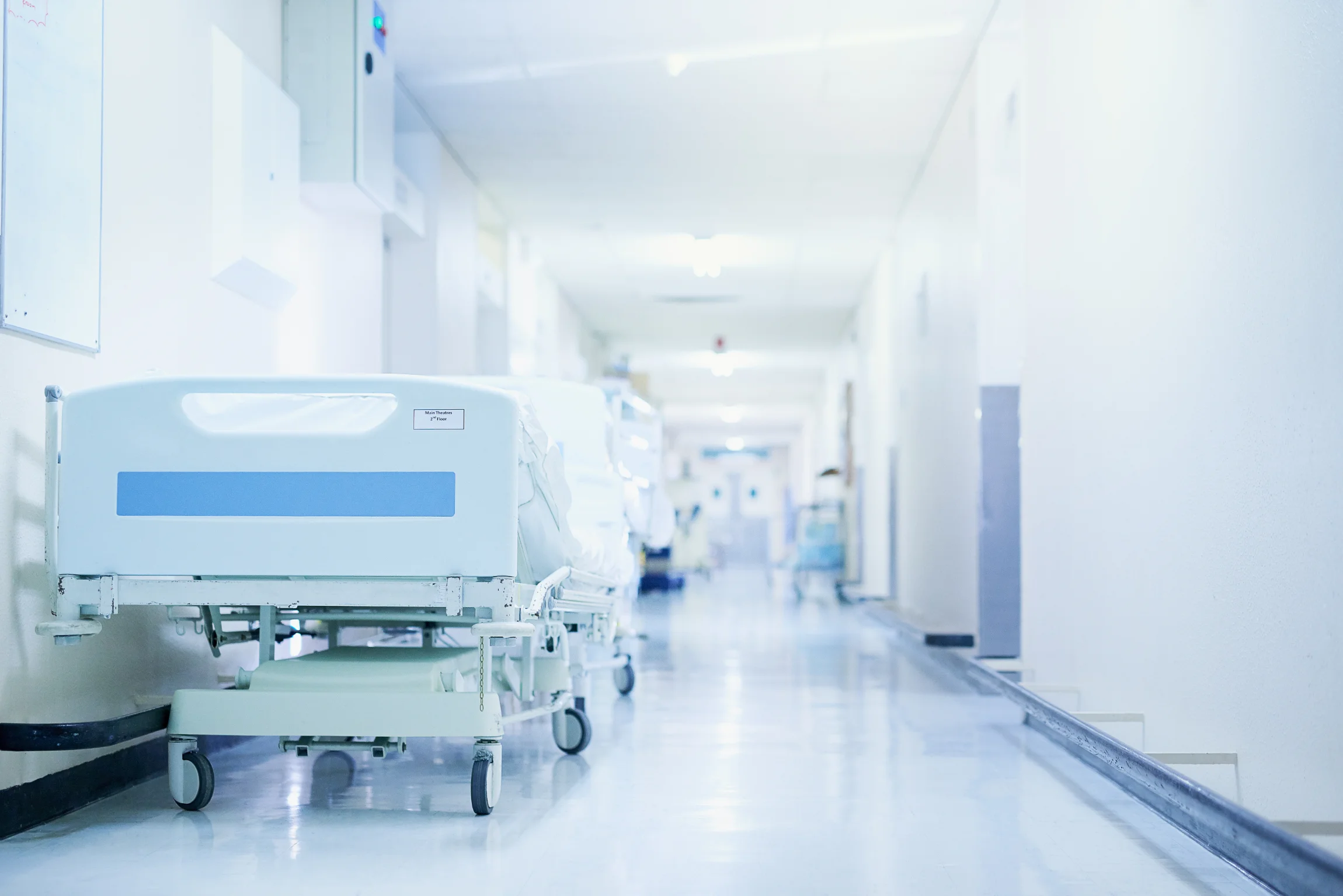
This case concerns a civilian patient requiring specialized care outside their crisis zone. An evaluation capacity was identified at a private hospital, but this first step was not enough.
A medical, administrative, and institutional challenge
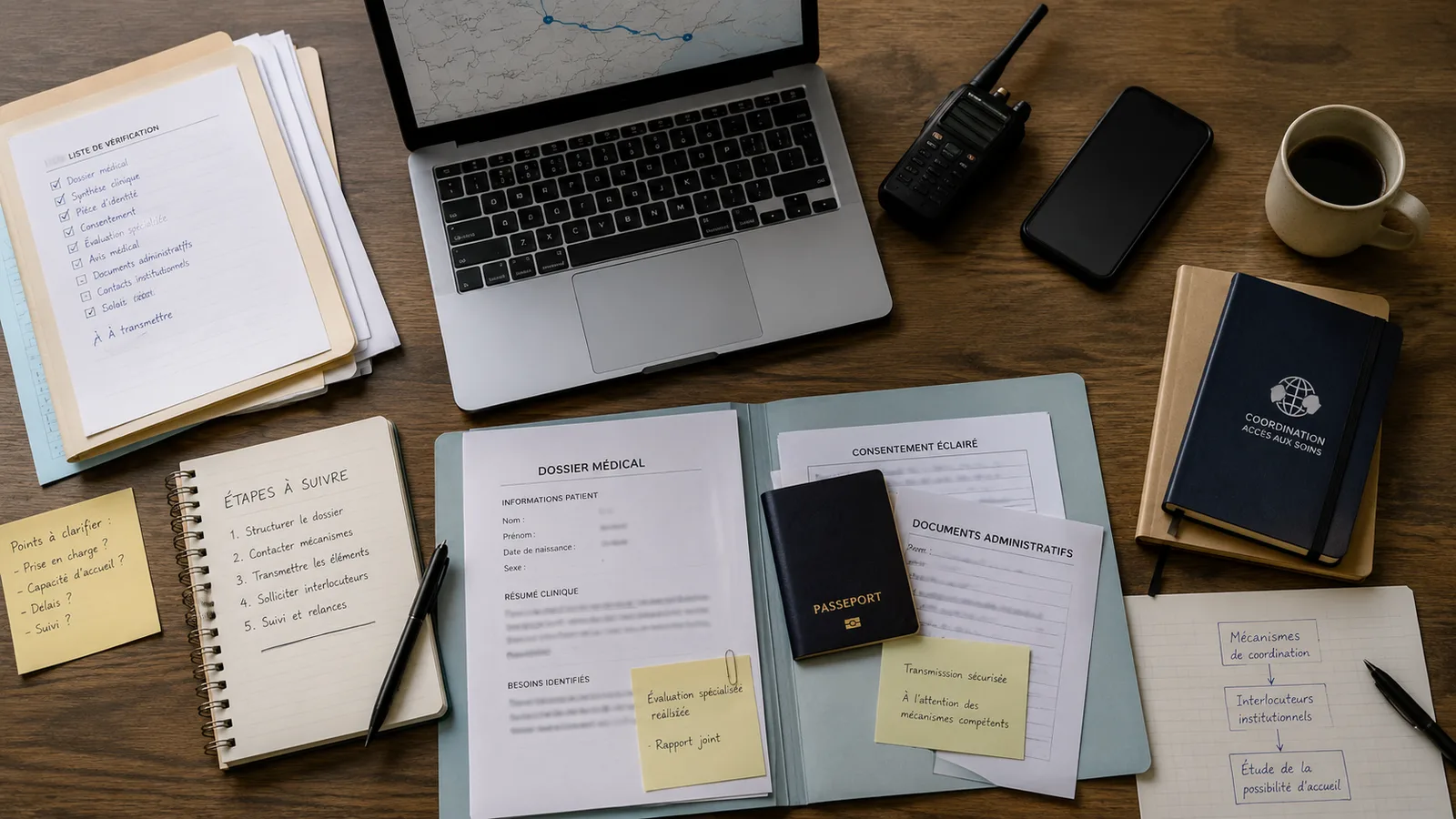
The case file needed to be structured, information clarified, a medical option secured, relevant elements transmitted to competent coordination mechanisms, and institutional contacts capable of examining a hosting possibility engaged.
Making a solution possible
In this type of situation, the challenge is not only medical. A possible solution can remain inaccessible if the case file is not clear, usable, and transmitted to the right contacts.
- Make the medical file clear and complete
- Identify a hospital facility capable of evaluating care provision
- Clarify admission and follow-up conditions
- Transmit elements to competent health mechanisms
- Engage with relevant embassies or ministries
- Maintain regular follow-up despite delays and uncertainties
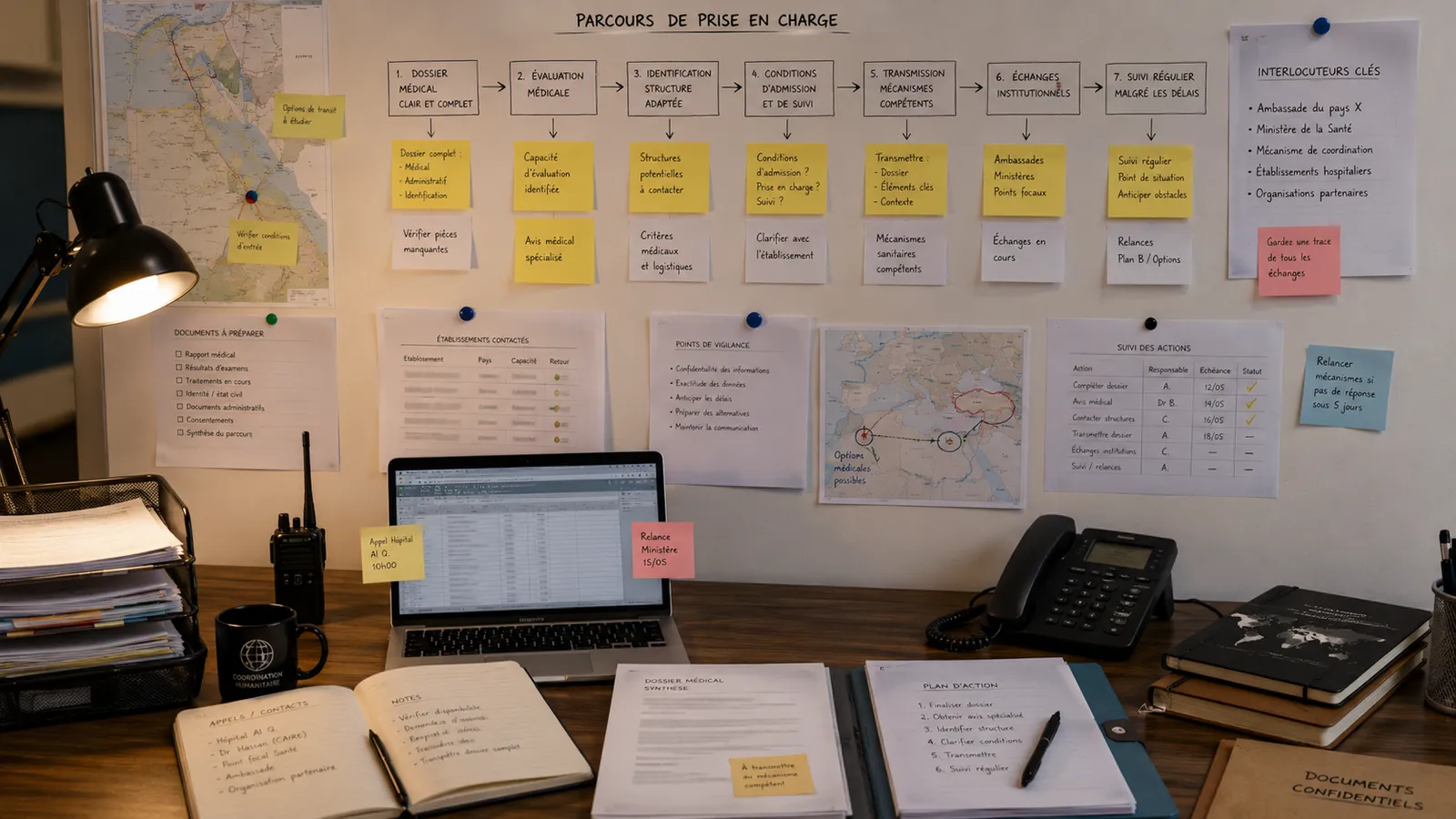
Pathway steps
1 — Understanding the situation
2 — Structuring the case file
3 — Identifying hospital capacity
4 — Coordinating with health mechanisms
5 — Engaging institutional contacts
6 — Following up on the case
Connecting stakeholders to unblock a pathway
Pont de Mer Humanitaire acts as a coordination facilitator between the family, medical contacts, hospital facilities, and relevant institutional stakeholders.
- Structure the medical file
- Identify hospital capacity
- Coordinate with health mechanisms
- Engage institutional contacts
- Ensure documented follow-up
What this case illustrates
This case shows that a medical pathway is not built solely around a care need. It relies on a coordination chain: family, doctors, hospitals, health mechanisms, embassies, ministries, humanitarian actors, and competent institutions.
A missing document, information not transmitted, or an unidentified contact can slow down or block the entire pathway.
Pont de Mer Humanitaire intervenes to connect these elements: make the case file readable, secure exchanges, maintain follow-up, and help open a hosting possibility when conditions can be met.
What your support enables
- Document case files
- Verify available information
- Engage with families and healthcare professionals
- Contact hospital facilities
- Coordinate with competent health mechanisms
- Conduct institutional procedures
- Ensure regular follow-up until a possible solution is identified